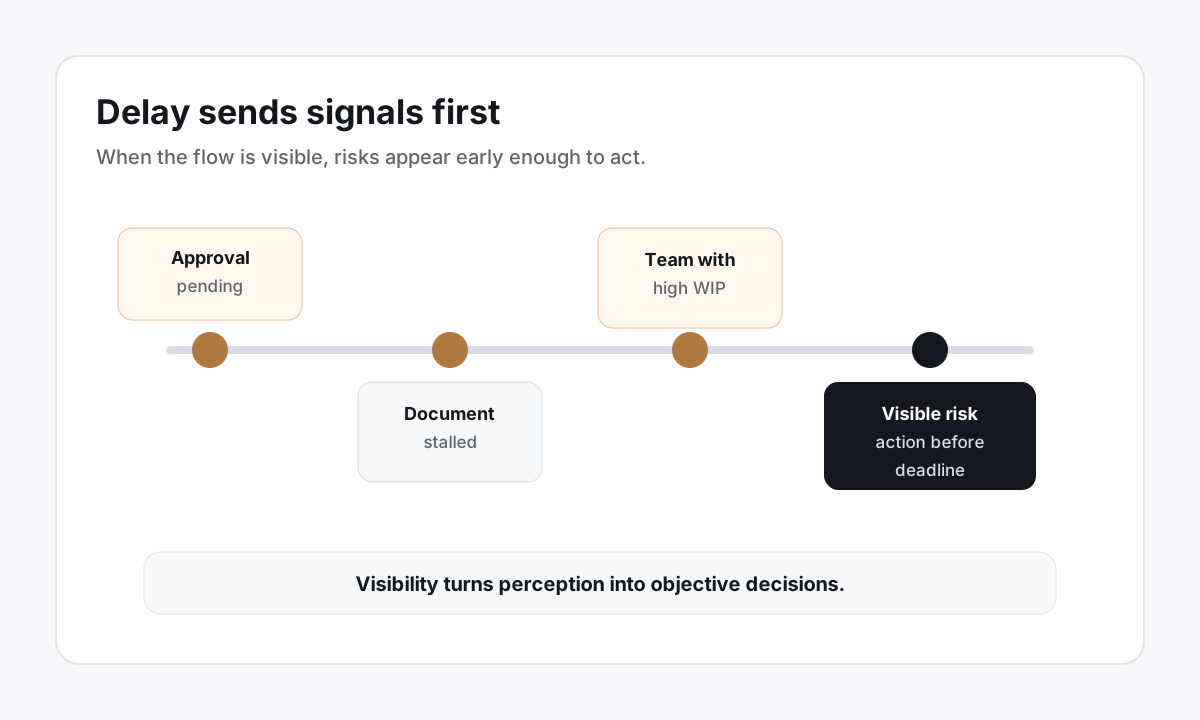
Engineering projects rarely become late from one moment to the next. Before the deadline slips, there are almost always signals: an approval that did not arrive, a document that stopped moving, a technical review still pending, a purchase waiting for information, an overloaded team or a scope change poorly registered.
The problem is that when management happens across scattered spreadsheets, emails, messaging groups and long meetings, these signals appear too late.
Delay is often not lack of effort. It is lack of visibility.
A project is a living flow
In engineering companies, a project is not an isolated task list. It is a living flow.
Survey, technical development, coordination, estimating, purchasing, documentation, approval, execution and measurement are connected all the time. One stage depends on another. If one part is delayed and nobody sees it early, the impact spreads.
This is where project management software stops being just a tool and becomes a control structure.
With the right system, the company can see what needs to be done, who owns it, what the deadline is, which stage each deliverable is in, which activities are blocked and which decisions depend on the client, the team or third parties.
The question "how is the project going?" stops depending on perception and starts having an objective answer.
Software alone does not solve it
Technology helps, but it does not replace method.
The real gain appears when software is combined with a better way to execute, monitor and correct work. This is where agile methods become useful.
Although they became popular in software development, agile methods are valuable for any complex work, especially when there are many stages, dependencies and changes along the way. Engineering fits that scenario well.
Being agile does not mean improvising. It means planning in smaller cycles, checking progress more frequently and adjusting before the problem becomes expensive.
The backlog, for example, organizes everything that needs to be done in the project. In an engineering company, it may include surveys, drawings, specifications, coordination, approvals, purchasing, site visits, reports, measurements and client deliverables.
A sprint creates short execution cycles, usually weekly or biweekly. Instead of controlling the project only through large milestones, the team defines what must be delivered in that period. This creates focus.
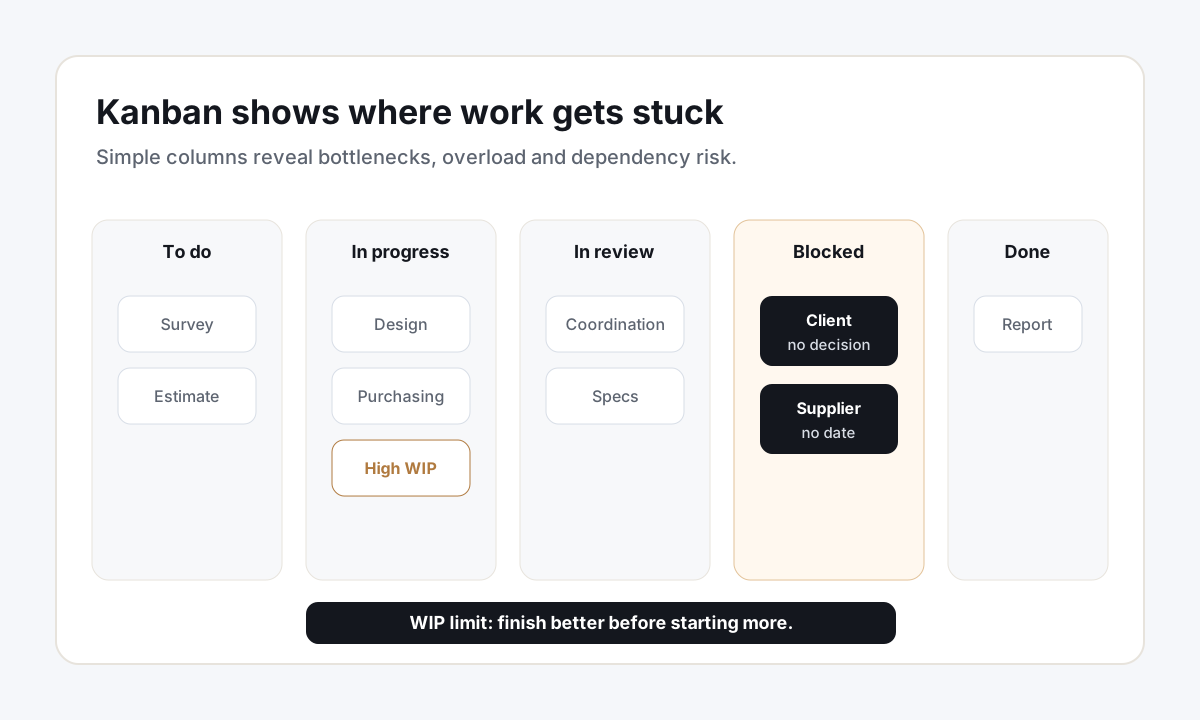
Kanban organizes activities into simple columns such as "to do", "in progress", "in review", "blocked" and "done". Visually, everyone can understand where work is flowing and where it is stuck.
High WIP looks productive, but it charges interest
Another important point is limiting WIP, or work in progress.
Many companies confuse productivity with starting many things at the same time. In practice, too many open tasks create loss of focus, delays and rework. Limiting WIP helps the team finish better before starting more.
In engineering projects, this matters. A team trying to move ten deliverables at once may look busy, but not necessarily productive. Software helps reveal that overload and reorganize priorities.
It also helps make meetings more objective. A daily, or short daily meeting, can answer three simple questions: what was done, what will be done and what is blocking progress?
In fifteen minutes, leadership can identify risks before they become delays.
Traceability protects the operation
The combination of software and method creates traceability.
Comments, attachments, approvals, scope changes and important decisions stop being scattered across loose conversations. Everything starts existing inside the project context.
That protects the company. If the client requested a change, it is recorded. If an approval was late, it is visible. If a deliverable depends on external information, it appears in the flow. Management stops depending on memory and starts operating with history.
Another gain is indicators. Project management software can track progress percentage, tasks completed on time, blocked activities, average approval time, rework by discipline, planned hours versus actual hours, schedule deviations, scope changes and pending deliverables by owner.
These numbers help the company ask better questions: where are we falling behind? Which stage creates more rework? Who is overloaded? Which approvals are blocking the project? Is the schedule still realistic? Is the client responding within the agreed timeframe?
Without data, the answer comes from guesswork. With data, it comes from management.
Before the tool, map the real project
It may sound contradictory coming from a company that builds software, but the first step is not buying a tool.
The first step is mapping the real project.
Before turning any process into a system, it is necessary to understand how work happens today: which stages exist, who participates, where approvals appear, which documents circulate, which tasks depend on third parties, where delays happen and which decisions usually get lost along the way.
Good software is not born from a beautiful screen. It is born from a well-understood process.
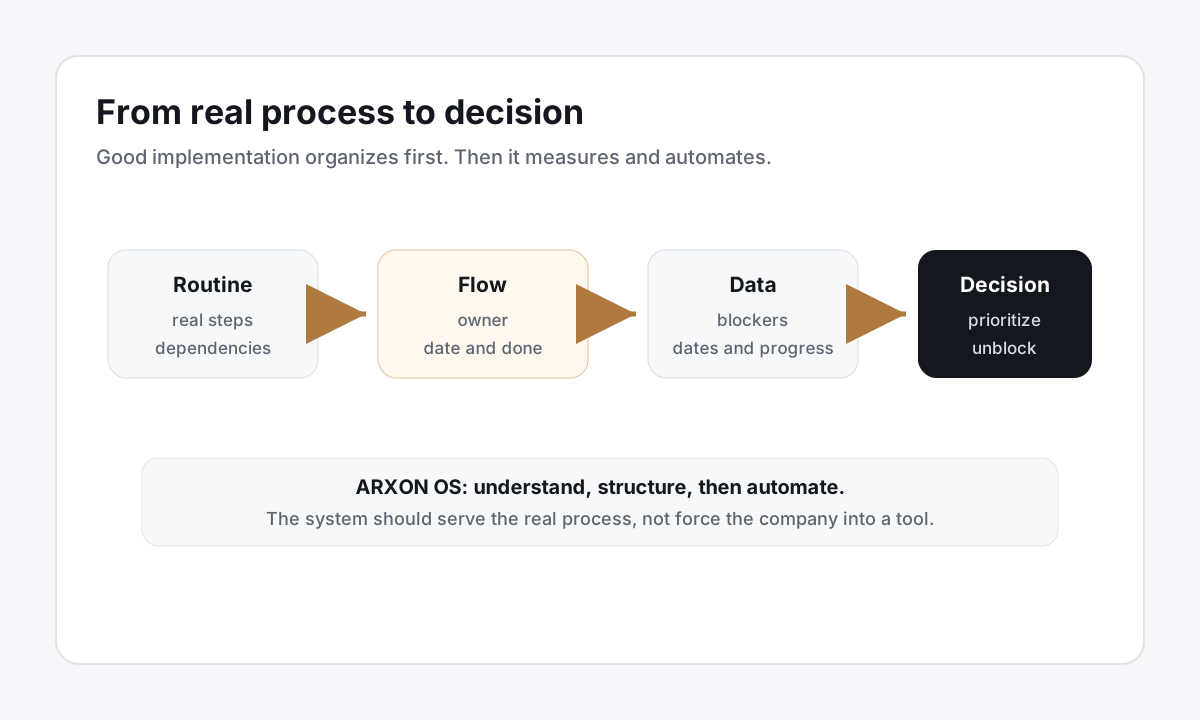
That is why, in ARXON OS, implementation starts by reading the operation. Before designing a flow, automation, dashboard or indicator, we seek to understand the company's routine: how projects arrive, how they are distributed, how they move forward, where they get stuck and which information leadership needs to see in order to decide better.
This diagnosis avoids a common mistake: adapting the company to the tool. The right path is the opposite. The tool should serve the real process, organize what is scattered today and give visibility to what used to depend on memory, meetings or manual follow-up.
Start with a pilot
After mapping, implementation can begin simply, with a pilot project. It does not need to be the largest or most complex. The ideal choice is an active project, with clear stages and an involved team, so the new model can be tested without freezing the whole operation.
In that pilot, the company can structure a basic flow:
To do -> In progress -> In review -> Blocked -> Done
Then it lists the main deliverables in the backlog: survey, executive design, coordination, estimate, client approval, purchasing, schedule, site visits, reports and measurements.
Each task needs at least three pieces of information: owner, deadline and done criterion.
The done criterion avoids vague tasks. "Review project" is too broad. Better: "review electrical design and register technical issues by Friday". This way, everyone knows when the deliverable is actually complete.
From there, the system stops being a task repository and becomes a management structure. It shows what is stuck, who is overloaded, which approvals are late, which deliverables are at risk and where leadership needs to act.
Clarity before automation
The best implementation does not begin with every feature. It begins with clarity.
First, understand. Then structure. Only then automate.
In the end, project management software is not just a digital agenda. It is a way to turn tasks into flow, flow into data and data into decision.
Agile methods enter as execution discipline: short cycles, prioritization, continuous review, delivery focus and adaptation. Software enters as structure: it centralizes, records, measures and connects the work.
Together, they help engineering companies leave reactive management behind and move toward a more predictable, collaborative and evidence-driven operation.
A delayed project is not destiny.
Often, it is only the result of a problem nobody saw in time.
Comments
No comments yet. Start the conversation.