In 2026, building a system became much faster.
A good idea, a few prompts, a development agent, a sequence of adjustments and, in a few hours, the application is standing. The screen opens. Login works. The customer registers. Payment goes through. The dashboard loads.
Everything looks ready.
But there is a question that almost always arrives late: did anyone test its security?
The problem is not using AI to code. That discussion has become too small. The real issue is different: AI has greatly accelerated software creation, but security still requires method, review, testing and responsibility. Delivery speed has never been proof of technical maturity.
Before AI, a team could already ship fast and insecure software. Now that delivery happens at a larger scale, with less friction and with the dangerous feeling that "it worked" means "it is ready".
It does not.
Working means passing through the expected path. Security means resisting the unexpected path. It means knowing what happens when someone manipulates a parameter, tests a hidden endpoint, forces a flow, tries to access another user's data or finds a forgotten key in the repository.
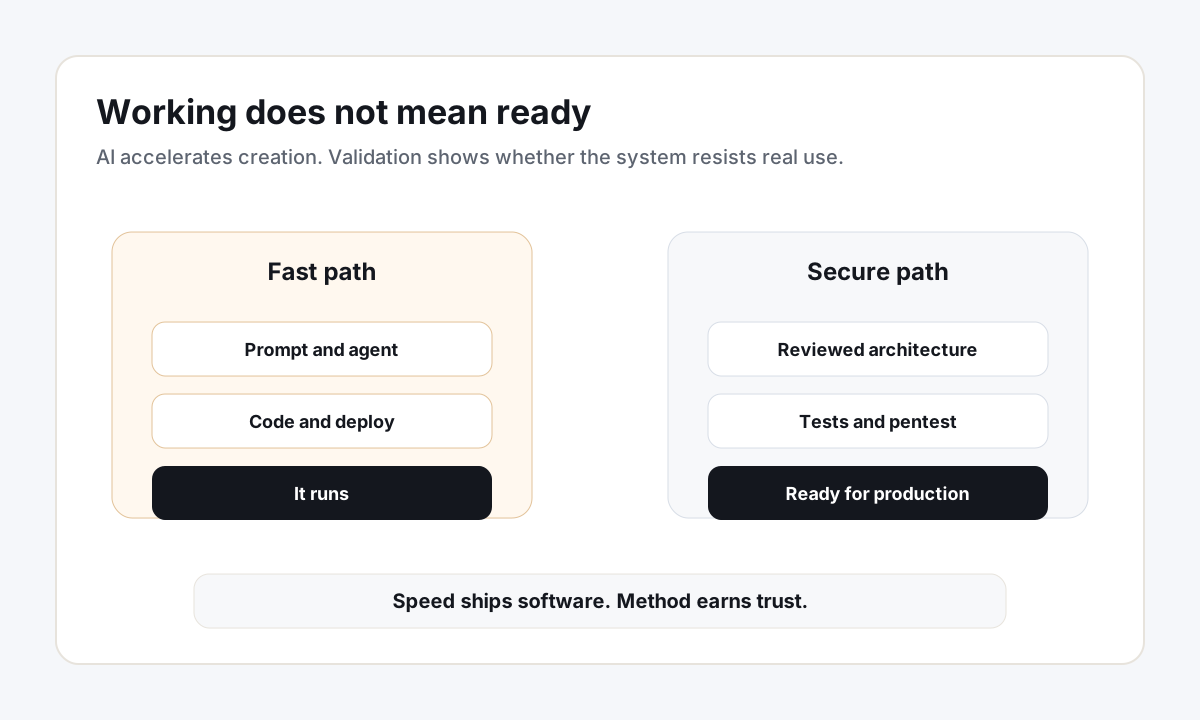
AI changed the pace, not the responsibility
A system generated with AI support can have a good interface, a convincing flow and still carry serious flaws inside: incomplete authentication, access control implemented only in the front-end, APIs exposing too much data, vulnerable dependencies, hardcoded keys, public buckets, sensitive logs, forgotten admin routes and permissions that are too broad.
None of this is new.
What changed is the pace.
Tools like Cursor, Claude Code, Codex and other development agents have made it possible to assemble front-end, back-end, database, authentication and integrations at a speed few teams had a few years ago. This is a huge advance. It reduces cost, gets ideas off the ground and brings product closer to business.
But when speed becomes process, validation needs to keep up.
The cycle "prompt, code, quick test, deploy" cannot become a production standard without a serious security layer. If the only criterion is "it went live and worked", the company is confusing delivery with readiness.
Security starts before deploy.
It starts in architecture, when the team defines how users will authenticate, how permissions will be enforced, which data will be stored, which integrations will access the system and which actions will require human confirmation.
It starts in code, with review, dependency analysis, secret scanning, automated tests and validation of critical rules on the server.
It starts in the process, with DevSecOps: the integration between development, security and operations. Instead of treating cybersecurity as an audit at the end of the project, it follows the system from the first commit to production routine.
When the system also has AI inside
This discussion becomes even more important when the application was not only built with AI, but also has AI inside it.
Chatbots connected to internal databases, agents that read emails, assistants that execute tasks, integrations with external tools and models with access to corporate documents create a new layer of risk.
The system stops only storing and displaying information. It starts interpreting, choosing paths and invoking tools.
This is where threats like prompt injection appear, when a malicious instruction hidden in an email, document or page tries to manipulate the model's behavior. There is also the risk of excessive permissions, when an agent receives more access than it needs to perform its function.
If an agent only needs to consult orders, it should not change financial data. If it needs to answer questions, it should not export an entire database. If it needs to summarize documents, it should not have unrestricted access to confidential files.
AI with too much access becomes operational risk.
That is why security in AI systems needs to look at code, infrastructure, data and agent behavior. It is not enough to ask whether the model answers well. The company must ask what it can access, which tools it can invoke, which actions require approval and how the organization records what happened.
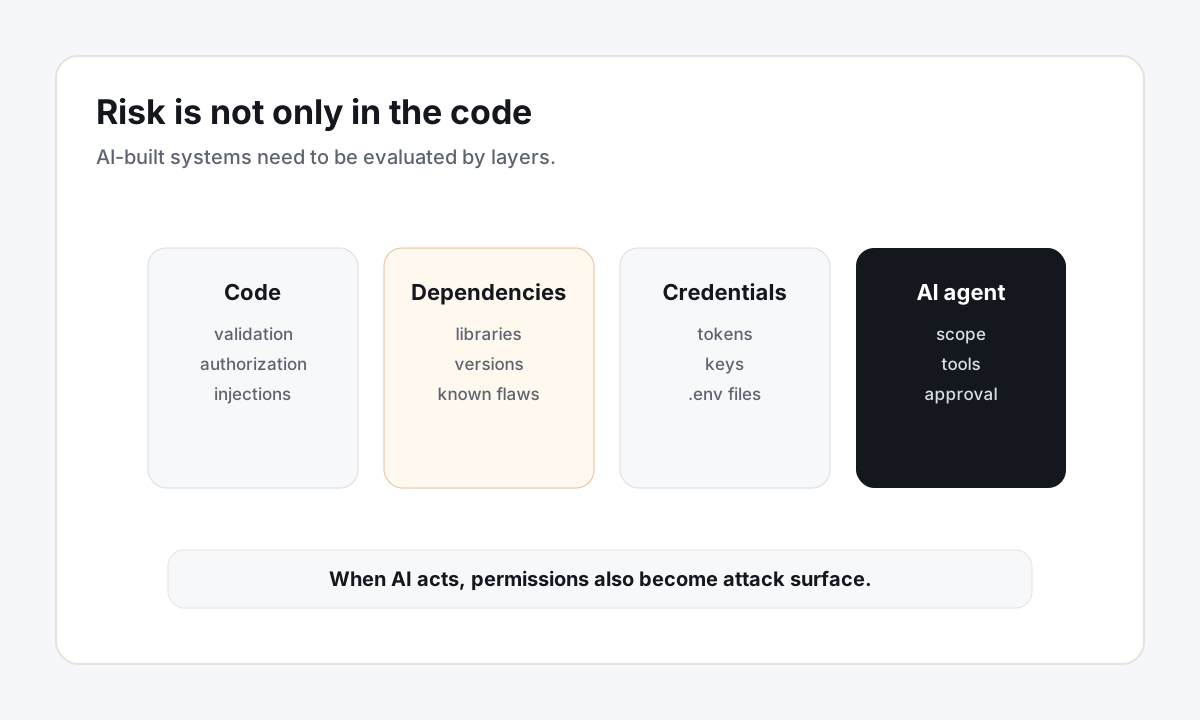
Tools help, but they do not think like attackers
Automated tools help a lot, but they do not solve everything.
SAST analyzes code looking for vulnerable patterns. SCA checks external dependencies and libraries with known flaws. Secret scanning looks for exposed tokens, passwords and keys. DAST tests the running application by simulating interactions with routes, forms and APIs.
These controls are indispensable. They find known problems with speed and consistency.
But scanners do not think like attackers.
A manual pentest looks for combinations. An endpoint that leaks an identifier may look harmless. A weak access control may look isolated. An administrative function without extra validation may go unnoticed. Together, these flaws may open a path to improper access, privilege escalation or data exposure.
In systems with AI agents, this human analysis becomes even more important. An automated test will rarely simulate well an attack where a malicious instruction manipulates the agent, invokes an external tool and uses excessive permission to cause real impact.
Cybersecurity is not only a checklist. It is adversarial reasoning.
Before production, answer with evidence
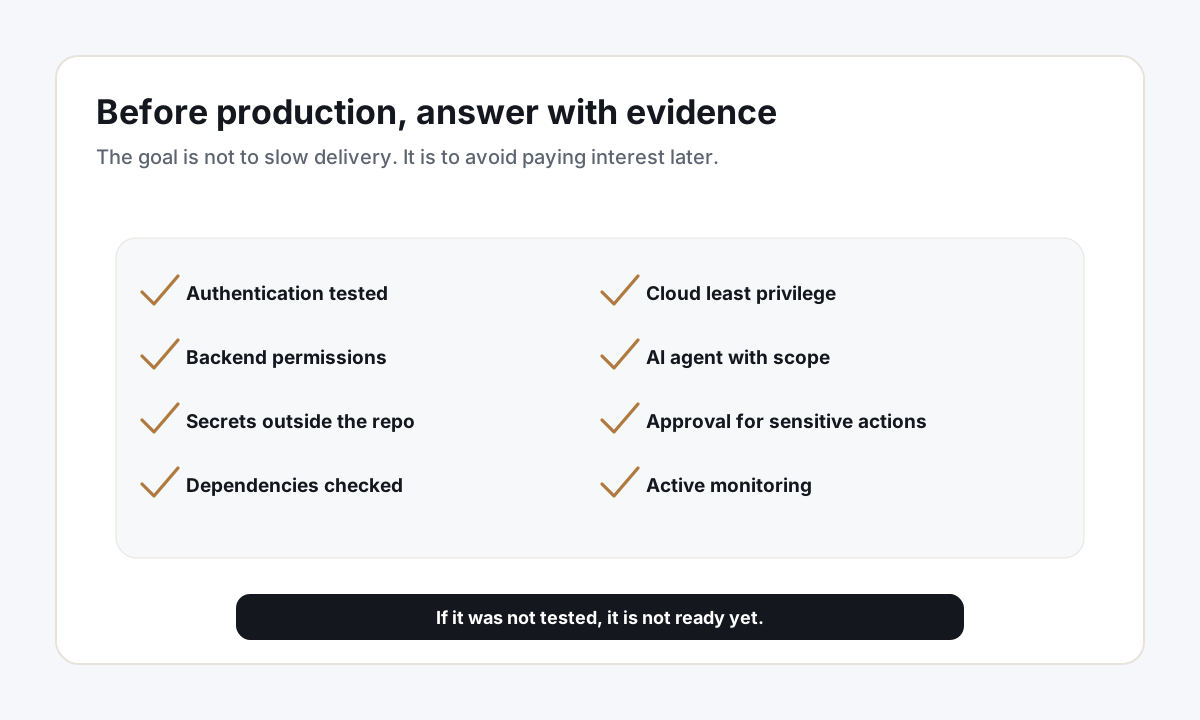
Before putting a system into production, some questions need to be answered with evidence.
Is authentication well implemented? Do tokens expire? Is there protection against brute force? Is password recovery secure? Are permissions validated in the back-end? Can a user access another user's data just by changing an ID in the URL?
Are test or debug endpoints exposed? Are there keys, tokens or .env files in the repository? Have dependencies been checked? Does the cloud follow least privilege? Are buckets, databases and queues private by default?
Does the application validate inputs against SQL Injection, XSS and log abuse? Do AI agents have limited scope? Do sensitive actions require human approval? Is there monitoring for anomalous behavior?
These questions are not meant to delay development. They prevent speed from charging interest later.
Incidents almost never start from one large isolated flaw. They usually come from accumulated small decisions: a permission that is too broad, a forgotten credential, a validation in the wrong place, an outdated library, a log exposing what it should not, an agent with more autonomy than necessary.
Professionalizing does not mean slowing down
The answer is not banning AI from development. That would be naive and impractical.
The answer is professionalizing its use.
If AI accelerates creation, the security process needs to be incorporated at the same pace: secret checks at every commit, code analysis in pull requests, dependency checks in the build, authorization tests in critical routes, infrastructure review before deploy, pentesting in relevant launches and continuous monitoring after the system is live.
The question "will we use AI to develop?" is getting old. Almost every team will use it, directly or indirectly.
The important question now is different: was what we are putting into production really tested?
An AI-built system can be excellent. It can be fast, efficient and well built. But it does not become secure because it was generated quickly, nor because it appears to work in the first test.
Security is born from process.
It is born from thoughtful architecture, reviewed permissions, verified dependencies, analyzed code, well-executed pentesting, active monitoring and clear responsibility for what enters production.
AI changed the speed of development.
Now companies need to change the seriousness of validation.
Comments
No comments yet. Start the conversation.